Everyone's talking about building in public. You see it all over Twitter, Indie Hackers, and every startup community online. Founders posting their MRR, sharing their failures, documenting every step of the journey.
But what does it actually mean? And more importantly, is it worth doing?
This article breaks it down honestly. No hype. Just the real picture.
The simple definition
Building in public means sharing your startup journey openly as it happens. Not after you've succeeded. Not in a polished case study once you've figured it all out. Right now, in real time, with all the messy parts included.
That means posting about your revenue even when it's zero. Sharing what broke last week. Telling people about the feature nobody used. Celebrating small wins like your first paying user even if it's just five dollars.
It is the opposite of the traditional "stealth mode" approach where you build quietly for months and then launch to the world hoping everyone loves it.
Where it started
The movement really took off when founders like Pieter Levels started sharing everything publicly. Revenue screenshots. User counts. Failed experiments. The real numbers behind products like Nomad List and Remote OK.
People responded because it felt honest. In a world full of polished startup stories, someone saying "here's what my dashboard actually looks like" was refreshing.
Indie Hackers built an entire community around it. Twitter's #buildinpublic tag became one of the most active founder spaces on the internet. And thousands of solo founders and small teams started documenting their journeys publicly every day.
What building in public is not
It is not bragging. It is not a marketing strategy disguised as transparency. It is not just posting revenue milestones when things are going well.
The founders who do it well share the whole picture. The bad months alongside the good ones. The features that flopped alongside the ones that worked. The moments of doubt alongside the wins.
If you only share the good stuff, your audience will feel it. And they will stop trusting you.
Why founders actually do it
There are several real reasons building in public works for early stage founders.
Accountability is the biggest one. When you tell the world you are going to ship something this week, you are far more likely to actually do it. Public commitment changes your behavior in a way private goals never do.
Audience building is the second reason. Every post you share is a small piece of content that reaches potential users, collaborators, and supporters. Over time this compounds. Founders who build in public consistently end up with an audience before they even launch.
Feedback is the third reason. When you share what you are building, people tell you what they think. Sometimes that feedback is uncomfortable. But it is always useful. It helps you build something people actually want instead of something you assumed they wanted.
Community is the fourth reason. The build in public world is genuinely supportive. Founders help each other. They share resources, give honest feedback, and celebrate each other's milestones. It is one of the most collaborative spaces in startup culture.
The problem nobody talks about
Here is the thing though. There is a real problem with how most founders build in public that nobody addresses directly.
All that content disappears.
You post a milestone on Twitter and it gets buried in 48 hours. You share a revenue update and two days later nobody can find it. Six months of honest, valuable documentation of your journey just vanishes into the feed.
There is no permanent record. No single place where someone can see your full story from the beginning. Not your followers. Not potential users checking if you are the real deal. Not even you, looking back at how far you have come.
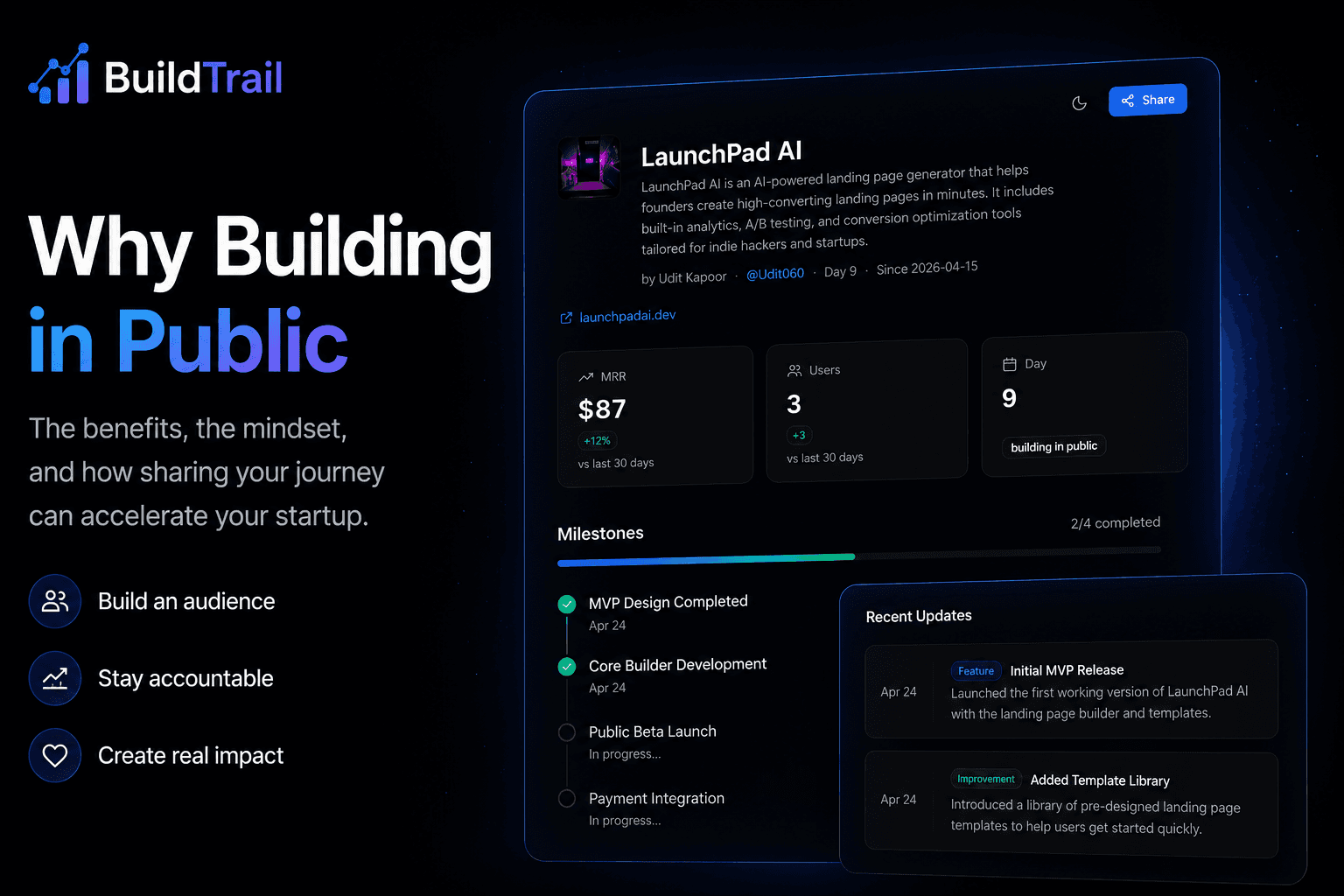
This is the gap that BuildTrail was built to fill. A permanent public page for your entire startup journey. Milestones, revenue, users, updates. One link that tells the whole story.
How to actually start building in public
Starting is simpler than most people think. Here is a practical approach.
Start with weekly updates. Every Friday or Monday, write a short post covering three things. What you shipped. What you learned. What you are working on next. Keep it under 300 words. Post it on Twitter and wherever your community hangs out.
Share real numbers from day one. Even if your numbers are zero. Saying "zero users and zero revenue on week one" is more trustworthy than vague language about "early traction." People respect honesty about where you are starting from.
Document the process, not just the results. Show your work. Share a screenshot of your dashboard. Talk about the feature you almost built but decided against. The process posts often get more engagement than the milestone posts.
Be consistent over being perfect. One post every week for a year matters far more than ten posts in January and then silence. Consistency is what builds an audience and keeps you accountable.
Is building in public right for every founder?
Honestly, no.
If you are in a highly competitive space where showing your hand early gives competitors an advantage, the traditional approach makes more sense. If you are building something sensitive where public documentation creates legal or privacy risks, be careful.
But for the vast majority of indie founders and small teams building SaaS products, tools, or communities, building in public is one of the most valuable things you can do. The benefits of accountability, audience building, and community far outweigh the downsides.
The bottom line
Building in public means sharing your real journey openly as it happens. It is not about looking good. It is about being genuine, staying accountable, and building trust with the people who might one day become your users.
The founders who do it consistently and honestly are the ones who build audiences, get early users, and create products people actually care about.
If you are ready to start documenting your journey properly, BuildTrail gives you one permanent public page for everything. Your milestones, revenue, users and updates in one place that does not disappear.
Free to start at buildtrail.app